The Hidden Connection Between Antacids & Vitamin B12
By Naveen Sharma, Lead Trainer, Yoga Circle
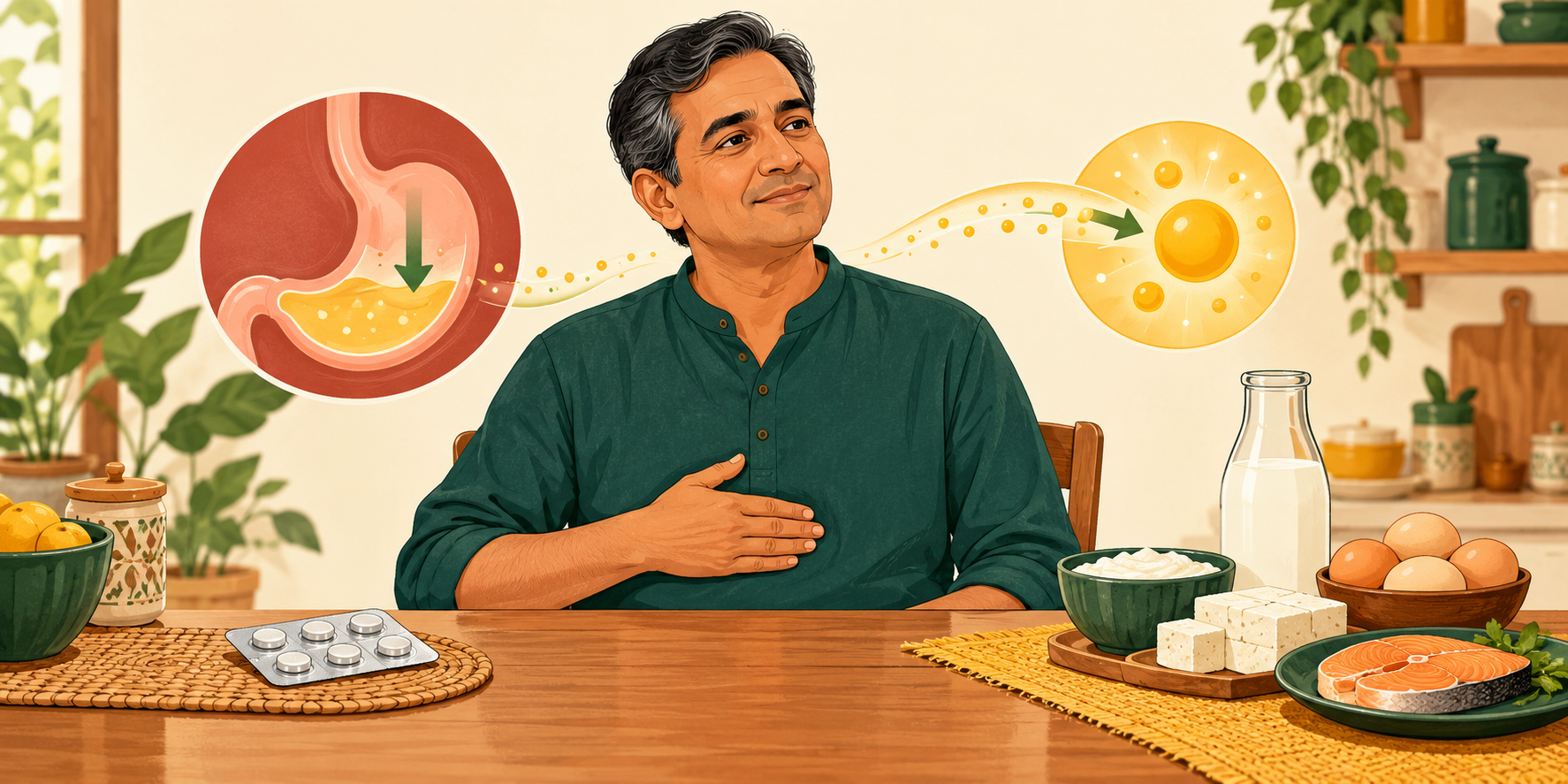
Many of us take over-the-counter antacids for weeks or months without realising how they can affect long-term energy, nerve health and overall vitality. Taking acid-reducing medicines regularly can lower your body's Vitamin B12 levels.
Nerve Health: Keeps your nervous system working smoothly, helping to prevent numbness or tingling in your fingers and toes.
Brain Clarity: Supports focus, memory and cognitive sharpness.
Why Your Body Needs Stomach Acid for B12
Vitamin B12 does not float freely in food. It is tightly bound to natural proteins in foods like milk, yogurt, eggs, cheese and legumes.
To release B12 so your body can absorb it into your bloodstream, your stomach relies on a healthy level of natural stomach acid. When antacids or daily acid blockers lower your stomach's acidity, that crucial bond may not be broken and the B12 may pass through your digestive system without being absorbed.
A Gentle Health Note: Listening to what your stomach is telling you today can help protect your overall strength and energy tomorrow.
Yoga Basics
How to Practise Chair-Supported Utkatasana
By Shwetha R, Lead Trainer, Yoga Circle
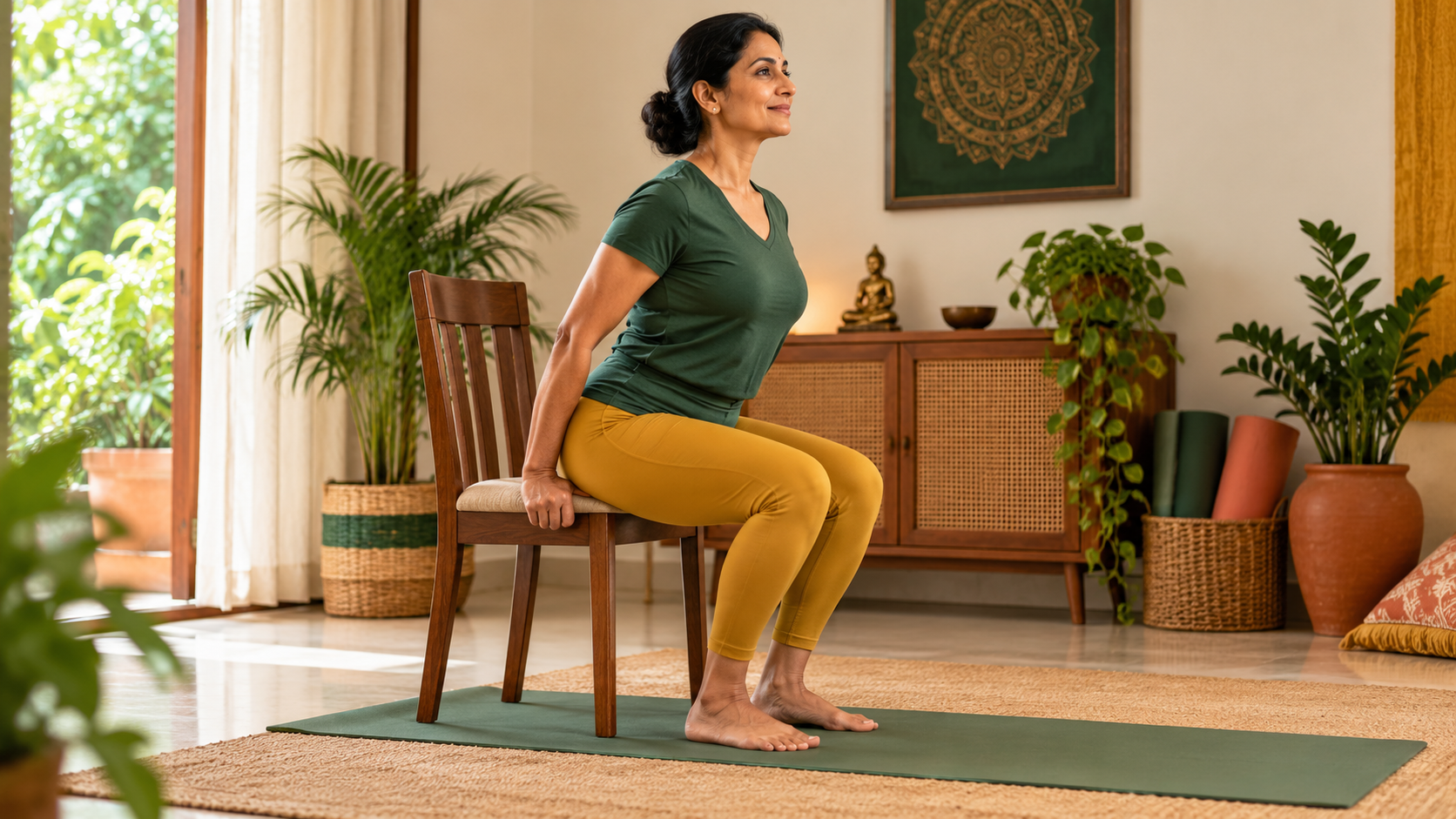
Chair-supported Utkatasana is a safe way to practise the chair-pose movement while building strength in the thighs and improving confidence with balance. The chair gives you support, but you should still move slowly and stay in control.
4-Step Practice
Position: Stand tall with a sturdy chair right behind you, feet hip-width apart.
Hinge: Place hands on hips or hold the chair and push your hips backward first.
Lower: Bend knees softly until your bottom gently touches the seat.
Stand: Press flat through both feet and exhale as you stand back up.
Quick Alignment Fixes
Knees caving in? Keep knees pointing over your second and third toes.
Heels lifting? Keep your entire foot flat on the floor throughout.
Dropping quickly? Lower down slowly so your leg muscles do the work.
Last Week in Review
Strength & Nutrition After 40
By Madhura Paroolkar, Nutritionist, Yoga Circle
As we cross 40, our bodies naturally go through changes. But ageing does not mean giving up your vitality. Building strength is a step-by-step process that anyone can start at any age.
To stay active, energetic and independent, building a balanced plate and moving your body daily are your best tools.
What Should an Ideal Plate Look Like?
Protein (For Muscle Repair)
As we age, we naturally lose muscle tone. Protein helps maintain and repair your muscles so you stay strong.
Where to find it: Dal, beans, paneer, curd, tofu, eggs, or chicken.
Carbohydrates (For Daily Energy)
Carbs are your body's main source of daily fuel. Choose wholesome sources that give steady energy without blood sugar spikes.
Where to find it: Ragi, oats, brown rice, and whole grains.
Healthy Fats (For Brain & Joint Support)
Healthy fats keep your joints moving smoothly and support brain focus.
Where to find it: Nuts, seeds, unsaturated cooking oils, and fatty fish.
Calcium (For Strong Bones & Nerves)
Essential for keeping your bones and teeth strong while supporting healthy nerve function.
Where to find it: Ragi roti, sesame seeds, curd, paneer, and leafy green vegetables.
Vitamin D (For Muscle & Bone Strength)
Works hand-in-hand with calcium to keep your bones dense and muscles functioning well.
Where to find it: Morning sunlight, fortified milk, yogurt, and egg yolks.
Fibre (For Smooth Digestion & Heart Health)
Keeps your digestive system running smoothly, helps control blood sugar, and supports heart health.
Where to find it: Fresh vegetables, fruits, oats, lentils, nuts, and seeds.
This is a celebration of the discipline, consistency and effort you have poured into your practice.
ARUN DAS MODAK
Saswati Nandy
ashok guggari
Sumit Bahl
Farhat
CPB
Pooja Naik
ARUN DAS MODAK
Ashok Solanki
Saswati Nandy
Pankaj
Soorneedi Anuradha
Uma Singh
Jeevaram malviya
ashok guggari
Mamta Jain
Lalitha Abdulfathak
Chaithra.s
KV Vasagan
Sumit Bahl
Shahiba
Sabina
Sneha NR
Roopa
Anubha
anita Kansal
Malli
Diksha Singh
Rumpa
Kalpana Salunkhe
Poornima Krishnamurthy
50 Sessions
Celebrating the commitment, consistency, and effort it took to get here.
Vrinda Naik
Swati Wattal
Pramod Khachane
PATTEM TEJASRI
Ghazala
Mukesh Agarwal
Rupa N Swamy
Chandra Chhallani
Ajanta Bhattacharya
Dimple
Rupa Antrolikar
Chandrasekar
Ashish
Nandhini
Namita Agarwal
Saratha
Narinder Kaur
Anju
Jigyasa Dahiya
Rekha Balani
Sarita Chopra
Aarti
Kalpana Sharma
Archana Singh
Krishna Agrawal
Manisha
Sindu.G.Nair
Binil
Savijay
Dipanwita Mazumder
Swati Wattal
Jagdish Rayka
Fouziya Ali
Pratima Pandey
Suchi
Minakshi Rastogi
Nahid khan
Vysuresh
Padmashree Murali
Preeti
Sushila Pokhariyal
Sunita Sinha
Kunal Jethwani
Community Voices
Saswati Nandy
Savita Narula
Recipe Corner
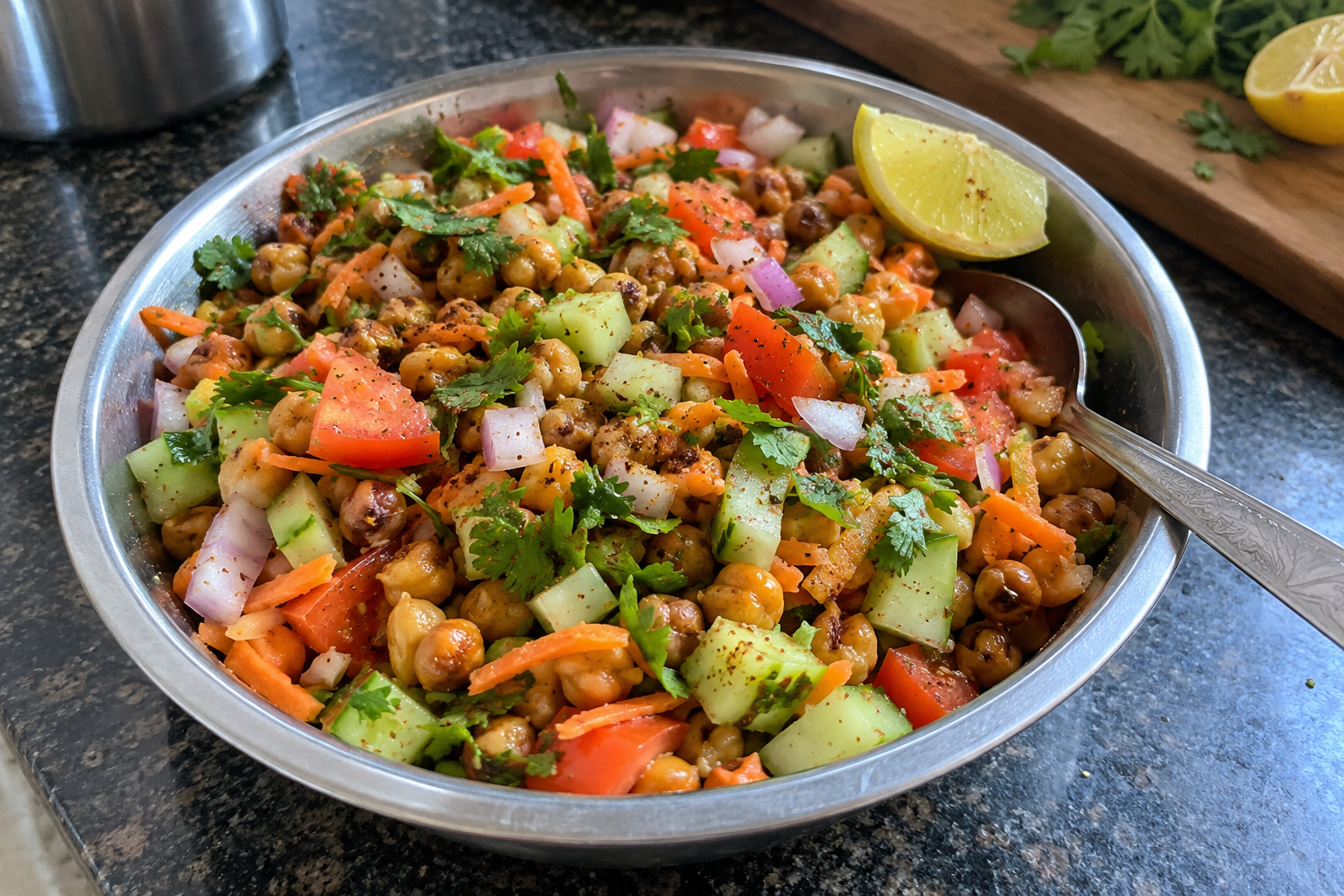
Roasted Chana and Vegetable Chaat
Ingredients
1 cup roasted chana
½ cucumber, finely chopped
1 tomato, finely chopped
1 small onion, finely chopped
1 small carrot, grated
2 tbsp fresh coriander
1 tbsp lemon juice
½ tsp roasted cumin powder
Black salt or regular salt, to taste
Red chilli powder, optional
2 tbsp pomegranate seeds, optional
Method
Mix the roasted chana, vegetables, coriander and pomegranate seeds in a bowl.
Add lemon juice, cumin powder, salt and chilli powder.
Toss well and serve immediately so the chana stays crunchy.
Why it is good for you
Roasted chana provides protein and fibre, while the vegetables add colour, crunch and volume. This makes the chaat more filling than a fried snack and works well as a quick evening snack.