Your Gut Has More to Do With Immunity Than You Think
By Naveen Sharma, Lead Teacher, Yoga Circle
"A healthier gut starts with what you eat every day."
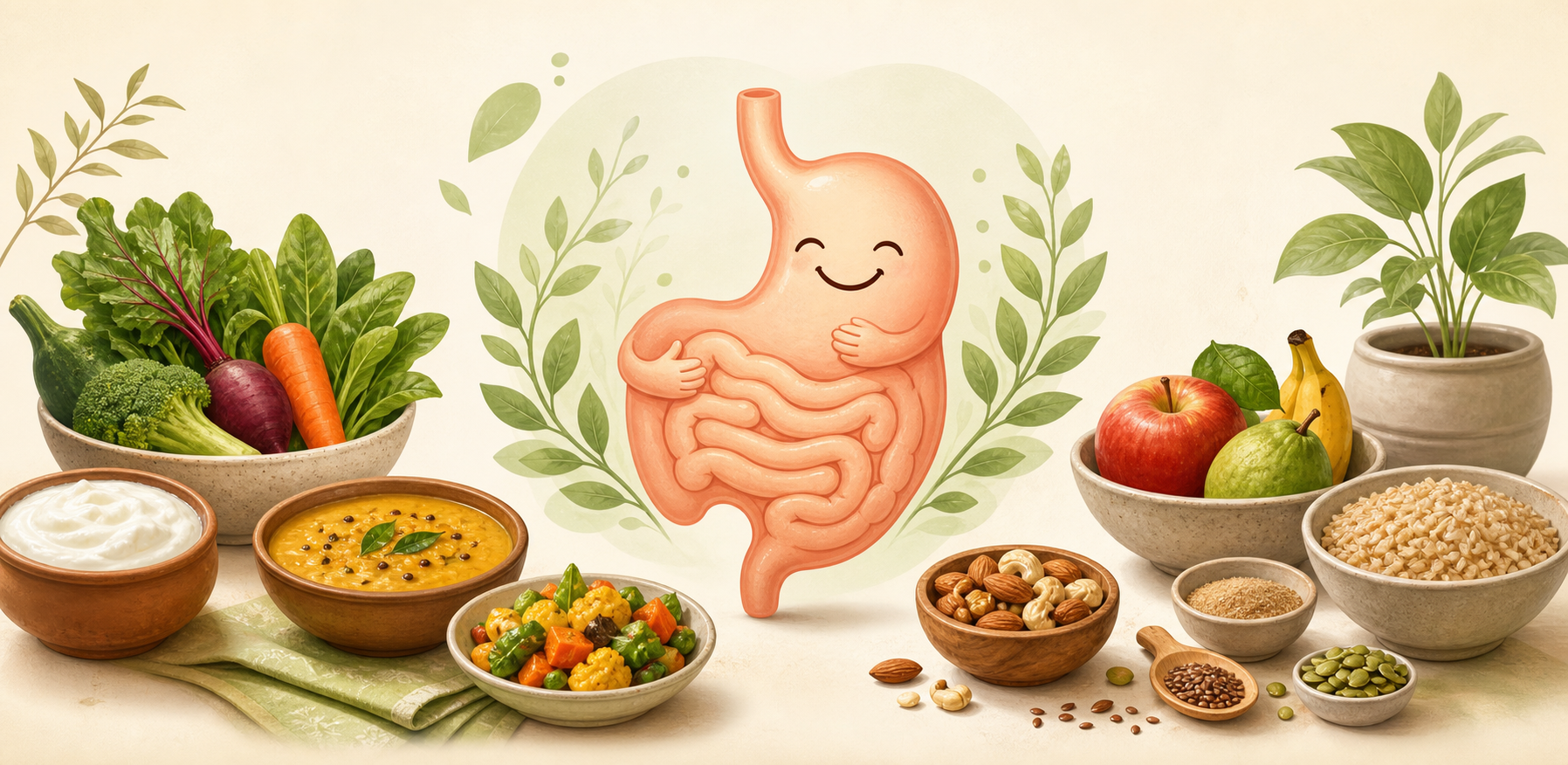
Your gut is not just about digestion. It also plays a big role in supporting your immune system. There is no one magical food that can "boost" immunity overnight, but simple everyday food habits can help keep your gut healthier and happier.
Look at what is missing from the plate: Many everyday meals fill us up but still miss fibre. For example, when we eat rajma chawal, dal-chawal, poha, upma, toast, or roti-sabzi, we may forget to add enough vegetables, salad, fruit, nuts, or seeds alongside them. A simple way to support gut health is to ask: “Where is the fibre in this meal?” Even adding cucumber, carrot, fruit, or an extra bowl of sabzi can make a difference.
Include fermented foods: Curd is an easy everyday option. You can also include foods like kanji, if they suit your body.
Increase fibre slowly: Adding too much too quickly may lead to gas or bloating, so build it up gradually and keep water intake up through the day.
When it comes to gut health, variety and consistency matter much more than chasing one so-called superfood.
Wellness Corner
5 Healthy Seeds To Add To Your Daily Diet
Seeds may be tiny, but they can be an easy way to add more fibre, healthy fats, minerals, and plant protein to everyday meals. Here’s a simple guide to a few seeds to include in your diet.
Chia
01
Key Nutrients
FibreOmega 3 fatty acidsCalcium
Great for health bowls because of its fibre content.
Keeps you full for longer and helps regulate blood sugars.
Heart friendly and may help improve HDL levels.
Flax / Alsi
02
Key Nutrients
Omega 3Fibre
Contains lignans, plant compounds with antioxidant properties.
Fibre helps regulate post-meal blood sugars.
Heart friendly and may help reduce cholesterol levels.
Good source of plant protein.
Sunflower
03
Key Nutrients
Vitamin EMagnesiumFibre
Antioxidant rich and may help reduce inflammation, including during PCOD.
Supports immunity.
Magnesium contributes to normal muscle and nerve function.
Good source of plant protein.
Pumpkin
04
Key Nutrients
MagnesiumZincProteinFibre
Good source of plant protein.
Healthy unsaturated fats support heart health.
Zinc contributes to normal immune function and wound healing.
Sesame / Til
05
Key Nutrients
CalciumFibre
Provides calcium, which supports bones and teeth.
Antioxidant rich.
Yoga Basics
How to Practice Anulom Vilom Pranayam the Right Way
Right hand - Vishnu Mudra: Fold the first and second fingers in. Use your thumb for the right nostril and ring finger for the left.
Left hand - Chin Mudra: Rest it on your thigh, palm up, with the thumb and index finger gently touching.
Sit comfortably with your back straight and shoulders relaxed; a chair is fine if needed.
Close the right nostril with your right thumb and breathe in slowly through the left nostril.
Close the left nostril with your ring finger, release the right nostril, and breathe out gently.
Breathe in through the right nostril.
Close the right nostril and breathe out through the left. This completes one round.
A Practical Guide to Building a Protein-Smart Plate
by Madhura Paroolkar, Nutritionist, Yoga Circle
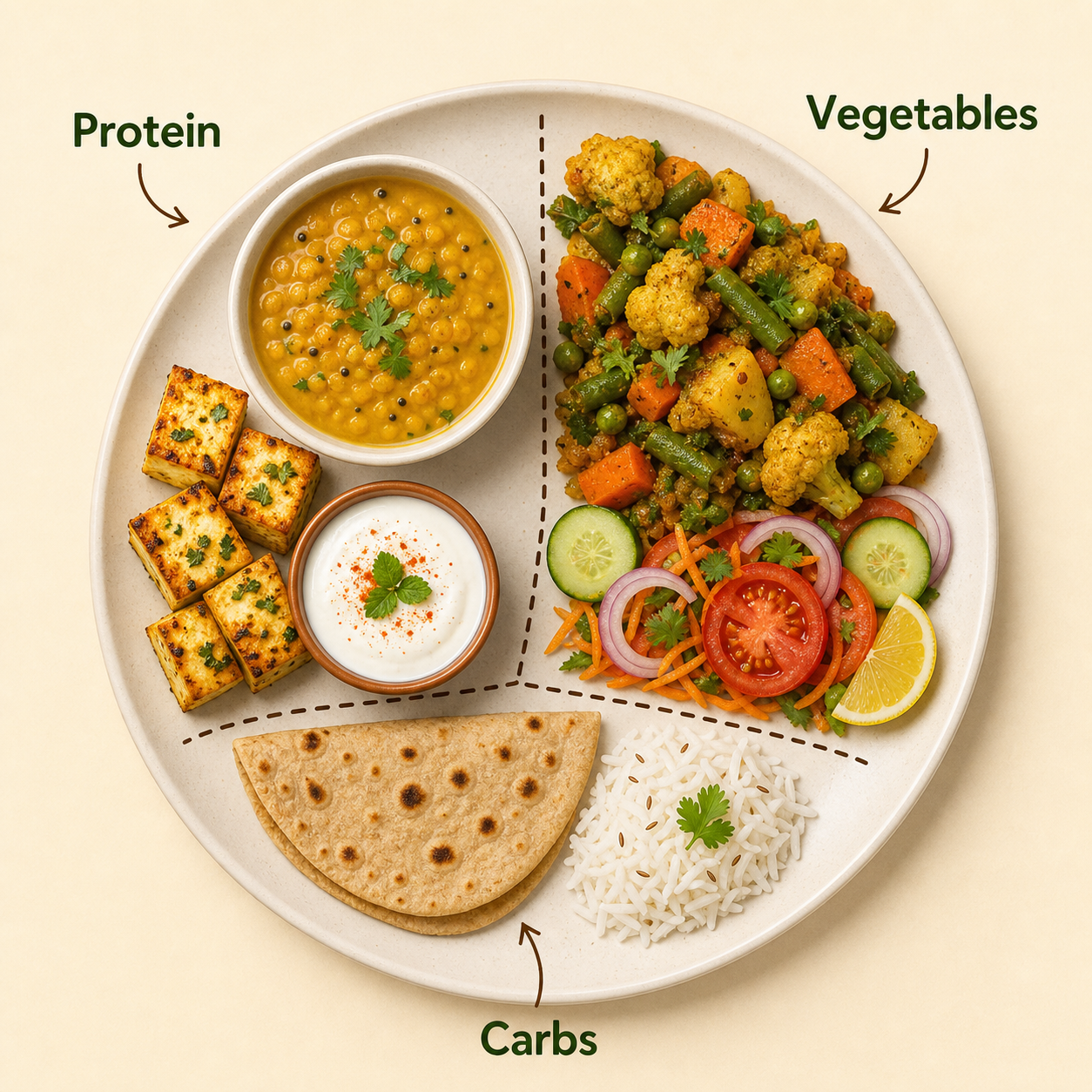
A balanced plate is about the right mix of protein, vegetables, and carbs. Many of us fill most of the plate with rice or roti, but a smarter plate begins with protein. It helps maintain muscle strength, supports recovery, and keeps you full for longer.
Build your plate like this
Add one protein source: dal, curd, paneer, tofu, egg, fish, or chicken.
Fill a good portion with vegetables: sabzi, salad, or lightly cooked vegetables.
Keep carbs moderate: take a smaller serving of rice or 1-2 rotis.
A simple protein smart plate can make everyday meals more filling and nourishing.