"Every 20 minutes, look at something about 20 feet away for 20 seconds"
Many of us spend long periods looking at a screen without realising it: watching a television serial, reading WhatsApp messages, attending an online class, or scrolling through our phone. During this time, we blink less and keep our eyes focused at the same close distance. This can leave the eyes feeling dry, heavy, watery, or strained.
The 20-20-20 habit gives your eyes a regular chance to relax and change focus:
Every 20 minutes, pause your screen use.
Look at something about 20 feet away for at least 20 seconds. This could be a tree outside, a building, or something across the room.
Blink slowly several times instead of immediately picking up another screen.
Keep your screen at a comfortable distance and avoid using it in a very dark room.
If possible, use a reminder on your phone or television timer until the habit becomes automatic.
Wellness Corner
Why Regular Health Checks Matter Even When You Feel Fine
Feeling well does not always mean everything is well. High blood pressure, high cholesterol, diabetes, and early kidney problems can develop quietly without noticeable symptoms. A routine check-up helps identify these changes early, when lifestyle changes or treatment can make the biggest difference.
A practical health-check list:
Blood sugar: Fasting blood sugar and/or HbA1c to check for prediabetes or diabetes.
Cholesterol: A lipid profile to assess heart-health risk.
Liver function: Important if you have fatty liver, diabetes, excess weight, or take long-term medicines.
Kidney function: Creatinine, eGFR, and urine testing, especially with high blood pressure or diabetes.
Thyroid: TSH testing when symptoms or medical history suggest a thyroid problem.
Vitamin B12: Particularly useful for vegetarians, vegans, older adults, or people taking metformin or acidity medicines.
Vitamin D: Consider testing if you have bone pain, muscle weakness, low levels in the past, or limited sunlight exposure.
Ideally, everyone should get a full-body check-up once a year. If you have health conditions such as diabetes, thyroid problems, high blood pressure, or high cholesterol, get your tests done as often as your doctor advises.
Quiz
Know Your Prakriti
Kapha
Pitta
Vata
Prakriti is your unique mind-body constitution, shaped by the balance of the three doshas. Take the quiz to discover your Prakriti and learn what supports your energy, digestion, sleep, and overall well-being.
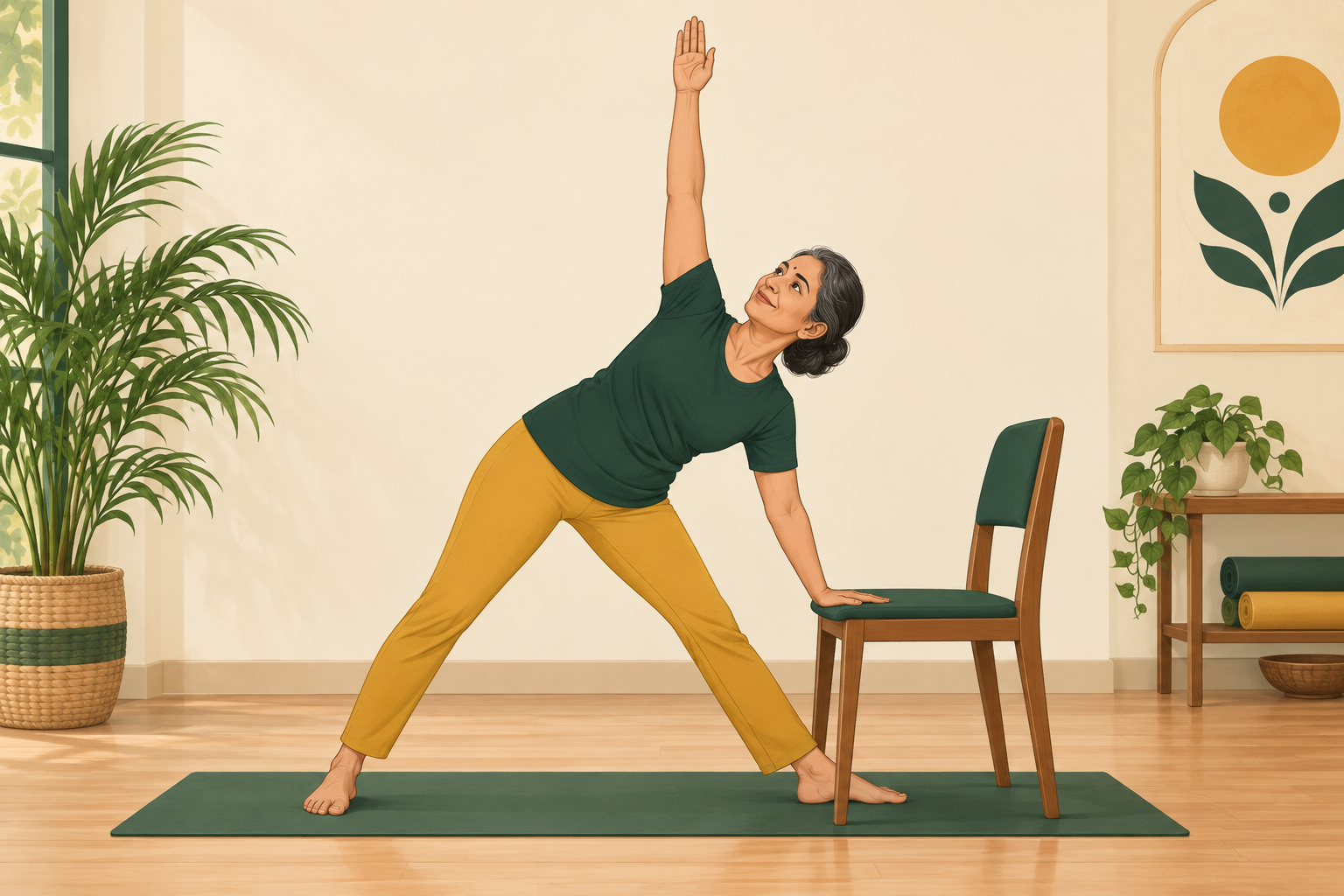
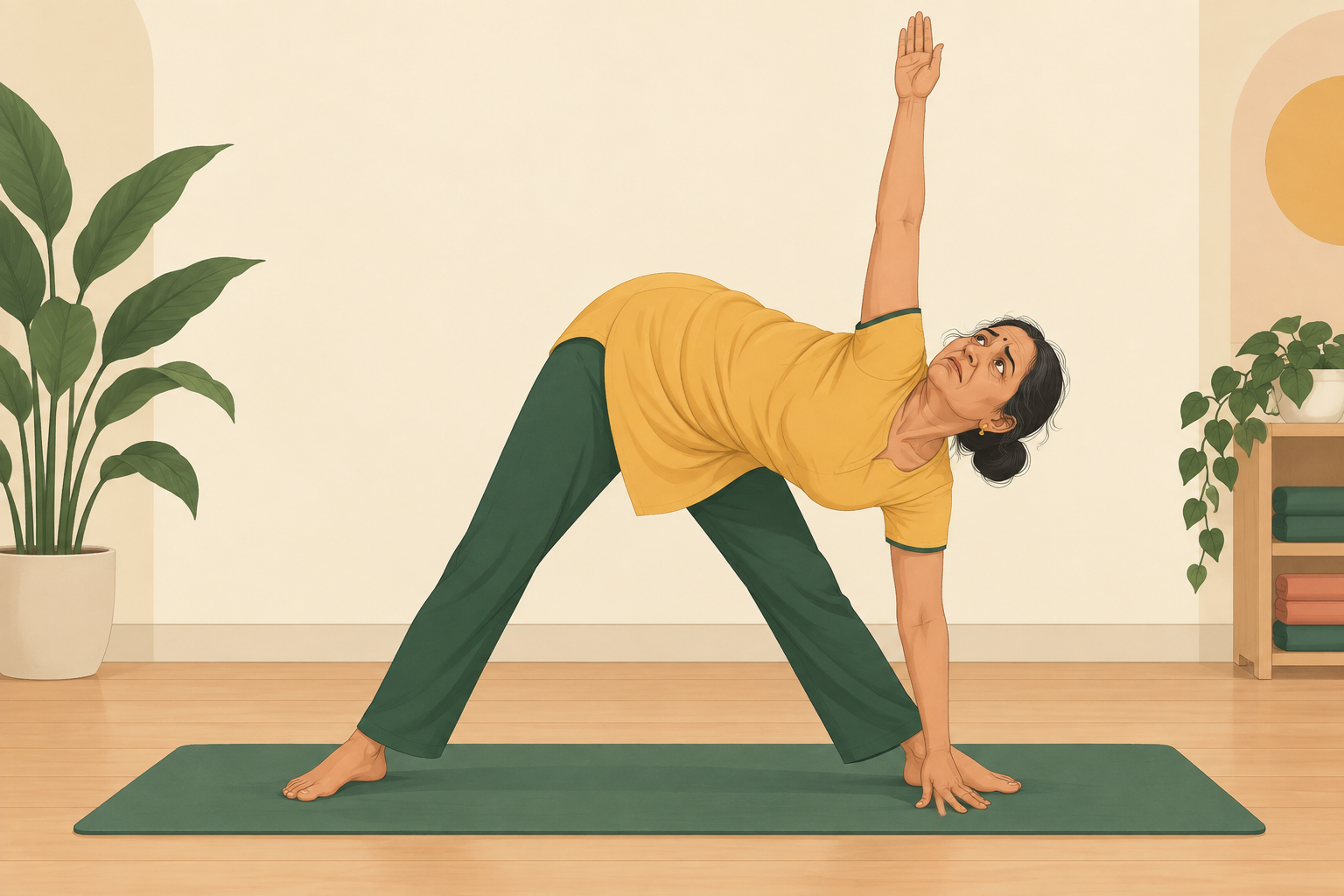
Trikonasana, or Triangle Pose, stretches your legs, hips, and the sides of your body. You don't need to touch the floor. Stay balanced and move only as far as comfortable. Use a chair for support if needed.
Stand with your feet wide apart. Turn your right foot outward and your left foot slightly inward.
Stretch your arms out at shoulder height. Keep your knees straight without locking them.
Reach to the right, then rest your right hand lightly on your shin, ankle, or a stable chair. Avoid pressing on your knee.
Keep your chest open. Raise your left arm, or keep your hand on your hip if that feels more comfortable.
Look up towards your raised hand, or sideways or down if that feels better for your neck. Breathe normally, then slowly come up and repeat on the other side.
Benefits: Helps strengthen your legs and stretch your hips, the backs of your thighs, and the sides of your body. It also helps you focus on your posture and breathing.
What to avoid:
Rounding your chest forward: It collapses the upper body, reduces space for breathing, and may strain the back.
Locking your knees: It can create unnecessary pressure in the knee joints and make you less stable.
Forcing your hand to the floor: It may twist or overstretch the spine, hamstrings, or shoulder. Use a block or chair instead.
Straining your neck: Looking up or turning too far can compress the neck and cause pain or dizziness. Keep your neck long and look forward or down if that feels better.
Create Life-Changing Habits, One Small Step at a Time
by Shivani Dubey, Nutritionist, Yoga Circle
Most of us are not lazy. We are often starting too big and expecting perfect consistency too early. Last week's session showed us that lasting habits become easier when we lower the effort and focus on repeating small actions that fit into real life.
What actually works
Small action
Lower friction
Repetition
Flexible routine
Keep going
Instead ofTry
A big goal
→
A 10-minute walk after dinner
Too much effort
→
Stretch while cooking or waiting for tea
Trying to change everything
→
Choose one habit for the next 7 days
Feeling guilty after missing a day
→
Return to the habit the very next day
Waiting for Monday
→
Start with the smallest step today
You do not need to change everything at once. Choose one small habit, make it easy to begin, and keep showing up.
Celebrating the commitment, consistency, and effort it took to get here.
Sushila Pokhariyal
Cigs Jayanthi
Padma
Annie David
Neha Goel
Nivia Sharma
Harshada
Rekha Rana
Savita Narula
Nandita
Kamlesh
Rachna Rawal
Manasi Malaviya
Aruna N
Sweta Rani
Roopali
Ambika Karunan
Kala Chopra
Sharmila Chattopadhyay
Maria
Sunitha
Community Voices
Shilpa
Mangala Abhyankar
Recipe Corner
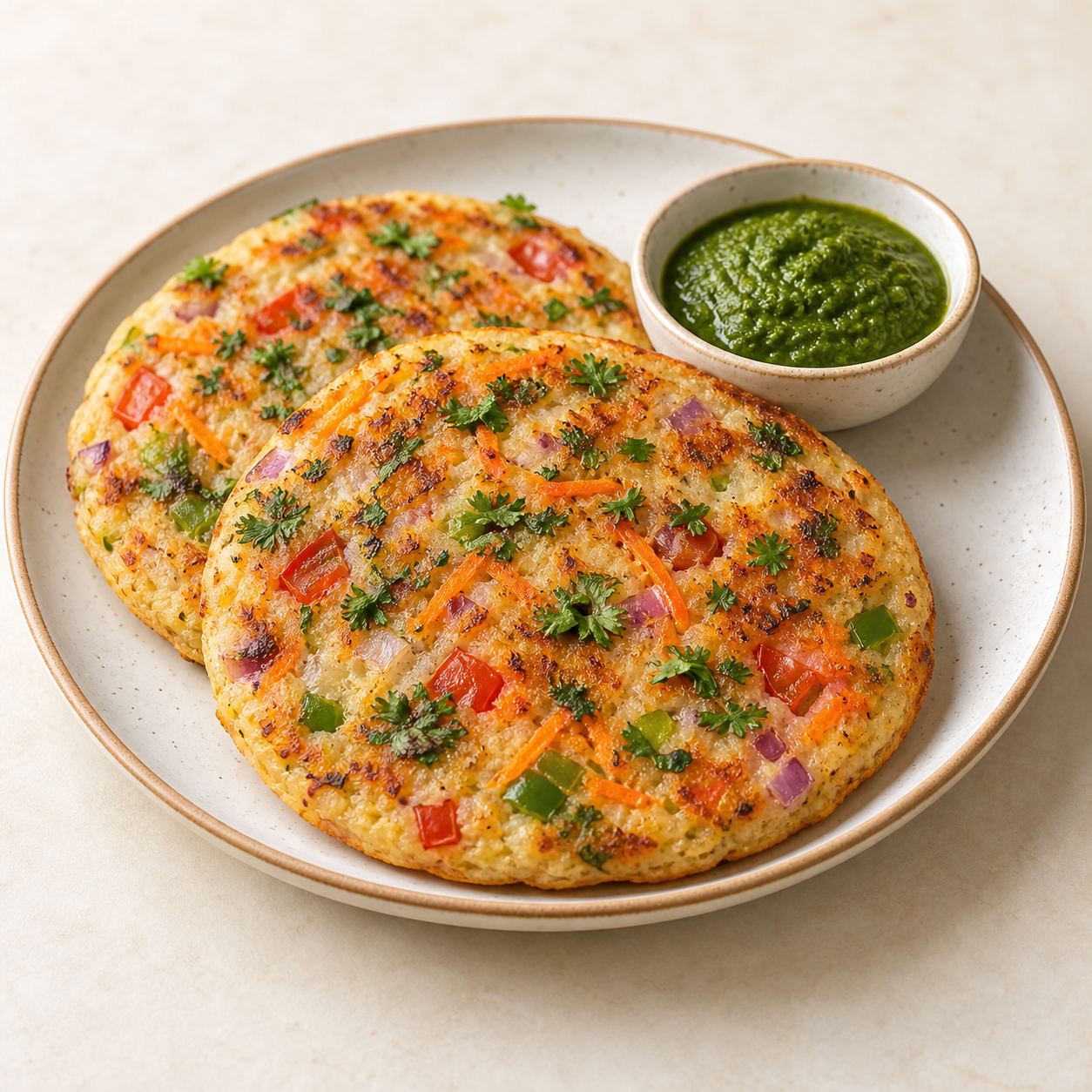
Oats and Vegetable Uttapam
Ingredients
1 cup oats, powdered
1/2 cup semolina or rice flour
1/2 cup curd
1 small onion, finely chopped
1 small tomato, finely chopped
1/2 cup grated carrot or finely chopped capsicum
1 green chilli, finely chopped, optional
1/2 tsp cumin seeds
Salt to taste
Water as needed
1-2 tsp oil for cooking
Fresh coriander to garnish
Method
Mix powdered oats, semolina or rice flour, curd, salt, cumin, and water to make a thick, pourable batter.
Rest the batter for 10-15 minutes. Add a little water if it becomes too thick.
Mix in the onion, tomato, carrot, capsicum, chilli, and coriander.
Heat a non-stick or lightly greased pan. Pour a ladleful of batter and spread it gently into a small, thick uttapam.
Cook on medium heat until the base is firm, then flip and cook the other side. Serve warm with plain curd or chutney.
Why this is good for you
Oats provide soluble fibre, which helps make the meal more filling and supports healthy digestion. If you add curd to the batter or serve it alongside, you also get protein and calcium. Vegetables such as carrot, capsicum, onion, and tomato add fibre, vitamins, and minerals, making the uttapam more nourishing. For a more balanced meal, serve it with curd or a protein-rich chutney.