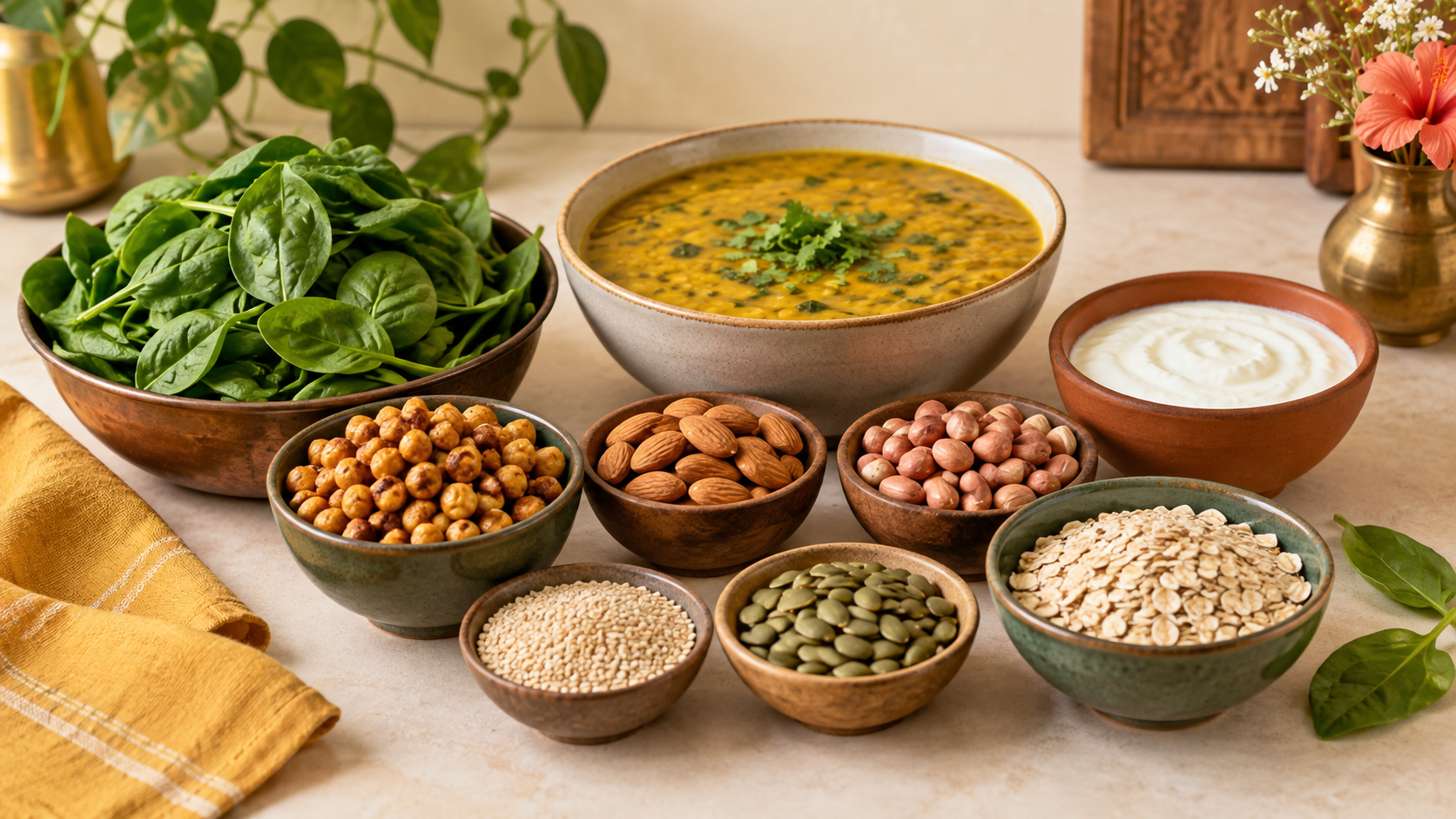
"Add a few magnesium-rich foods like dal, chana, peanuts, seeds and leafy greens through your day."
Magnesium is an essential mineral that your body uses every day. It helps your muscles and nerves work normally, supports energy production, contributes to healthy bones, and may also play a role in healthy sleep.
The good news is that you can get magnesium from many simple, everyday Indian foods.
Try adding a few of these through your day:
Breakfast: Add peanuts or til to poha or upma, or have oats with a few almonds.
Lunch: Include dal, chana or rajma. Add leafy vegetables like palak or methi regularly.
Evening snack: Swap biscuits sometimes for roasted chana, peanuts or a small handful of nuts.
Dinner: Include dal or beans along with your usual roti, rice or millet-based meal.
Easy extra: Sprinkle a little til, pumpkin seeds or flax seeds over curd, salad or other meals.
Simple takeaway: You do not need fancy foods or supplements. Dal, chana, peanuts, seeds, whole grains and green leafy vegetables can all help you get more magnesium from your regular diet.
Wellness Corner
How to Read a Food Label in 30 Seconds
The front of a packet may say “multigrain,” “baked,” or “no added sugar.” The back tells you whether the product is actually a good everyday choice.
Use this quick check before buying biscuits, cereals, namkeen or packaged snacks.
1Compare per 100 g
Serving sizes can be misleading because different brands may use different serving sizes. If you are comparing two similar products, look at the per 100 g column. This makes the comparison much easier.
2Read the first 3 ingredients
Ingredients are listed from the largest amount to the smallest. If maida, sugar, syrup or refined starch appears in the first few ingredients, it forms a significant part of the product. A packet can say “multigrain” on the front and still contain mostly refined flour.
3Check added sugar
Look for added sugar in the nutrition table. Also check the ingredient list for names such as sugar, jaggery, honey, glucose syrup, malt syrup or fruit concentrate. “No added sugar” does not automatically mean the product is low in sugar or a better everyday choice.
4Compare protein and fibre
When choosing between similar products, prefer the one with more protein and fibre, especially if the calories are similar.
Snack A 3 g protein · 1 g fibreSnack B 6 g protein · 4 g fibre
Snack B is generally the more filling and nutritious option.
5Check sodium and saturated fat
Namkeen, chips, biscuits and ready-to-eat foods can contain a lot of sodium or saturated fat in a small serving. Check the %RDA on the packet. A higher percentage means that one serving is using up more of your daily intake. And remember: if you eat two servings, the numbers double.
Yoga Basics
How to Practise Bhujangasana Without Straining the Back
by Shwetha R, Lead Teacher, Yoga Circle
Bhujangasana, or Cobra Pose, can strengthen the back and open the chest when done with control. You should focus on working the correct muscle rather than stretching too much. Keep the lower back comfortable and the shoulders relaxed.
How to do
Lie on your stomach with your legs straight.
Place your palms beside your chest, elbows close to the body.
Keep your legs active and pelvis on the mat.
Inhale and slowly lift your head and chest.
Use your back muscles and keep the hands light.
Keep the elbows slightly bent and shoulders away from the ears.
Look forward and breathe normally.
Exhale and slowly lower down.
Benefits
Strengthens the back
Opens the chest and shoulders
Improves spinal mobility
Supports better posture
What to avoid
Do not push hard through the hands.
Do not force the elbows straight.
Do not shrug the shoulders.
Do not throw the head back.
Come out if you feel sharp pain or pinching in the lower back.
Remember: In Bhujangasana, higher is not better. Comfortable and controlled is better.
Sugar and Sugar Alternatives
by Nilanjana Chowdhury, Clinical Nutritionist and Gut Health Advisor
Sugar is not found only in sweets. It can quietly enter our day through tea, coffee, biscuits, flavoured yoghurt, sauces, drinks, and desserts. The important question is not whether one meal contains sugar, but how often we consume it and in what quantity.
What happens when we consume sugar
Sugar
→
Digestion
→
Glucose
→
Blood stream
→
Insulin
→
Energy
What really matters
Whole fruit is different from added sugar: Fruit contains fibre, water, vitamins, and minerals. Fruit juice and sweetened foods mainly add sweetness and calories.
Jaggery and honey are not sugar-free: They may be less processed, but the body still treats them as sources of sugar. How much we consume and how often we consume them both matter.
“Sugar-free” does not mean “eat freely”: A product may contain stevia, monk fruit, sucralose, or sugar alcohols, but it may still be highly processed. Always read the full ingredient list.
Alternatives for Sugar
Stevia: Made from a plant, very sweet, and contains little or no calories.
Monk fruit: Made from a fruit and used in very small amounts. It is often mixed with other sweeteners.
Stevia or Monk fruit - How to choose the right one?
ErythritolUse with cautionReduce added sugar
AlluloseBetter optionUsually easier on digestion
Liquid monk fruitSimple choiceFew drops are enough
A simple 7-day change
Reduce the sugar in your tea or coffee gradually:
2 tsp → 1½ tsp → 1 tsp → ½ tsp
You can also replace one sugary drink with water, unsweetened tea, or plain chaas.
Celebrating the commitment, consistency, and effort it took to get here.
Mita Paul
Meena Bharucha
Shashikala Dixit
Priyanka Vyas
Rachna
Priya Rai
Asha Varun
Manmaya Kumar Pradhan
Pavandeep Kaur
Shashi Chawla
Madhu Hi
Deepa Sen
Prabhjot Kaur
Sunita Gupta
Jayesh Patel
Charu Chawla
Rajeshree
Bhama
Lilly
Sunita Sinha
Swarna
Inaobi Chongtham
Chitra Gupta
Pallavi
Kavita Ahir
Radhika Aggarwal
Ashwini Argade
Saroja
Anuradha Majumdar
Community Voices
Sudha Narayan ji
Jeevaram ji
Recipe Corner
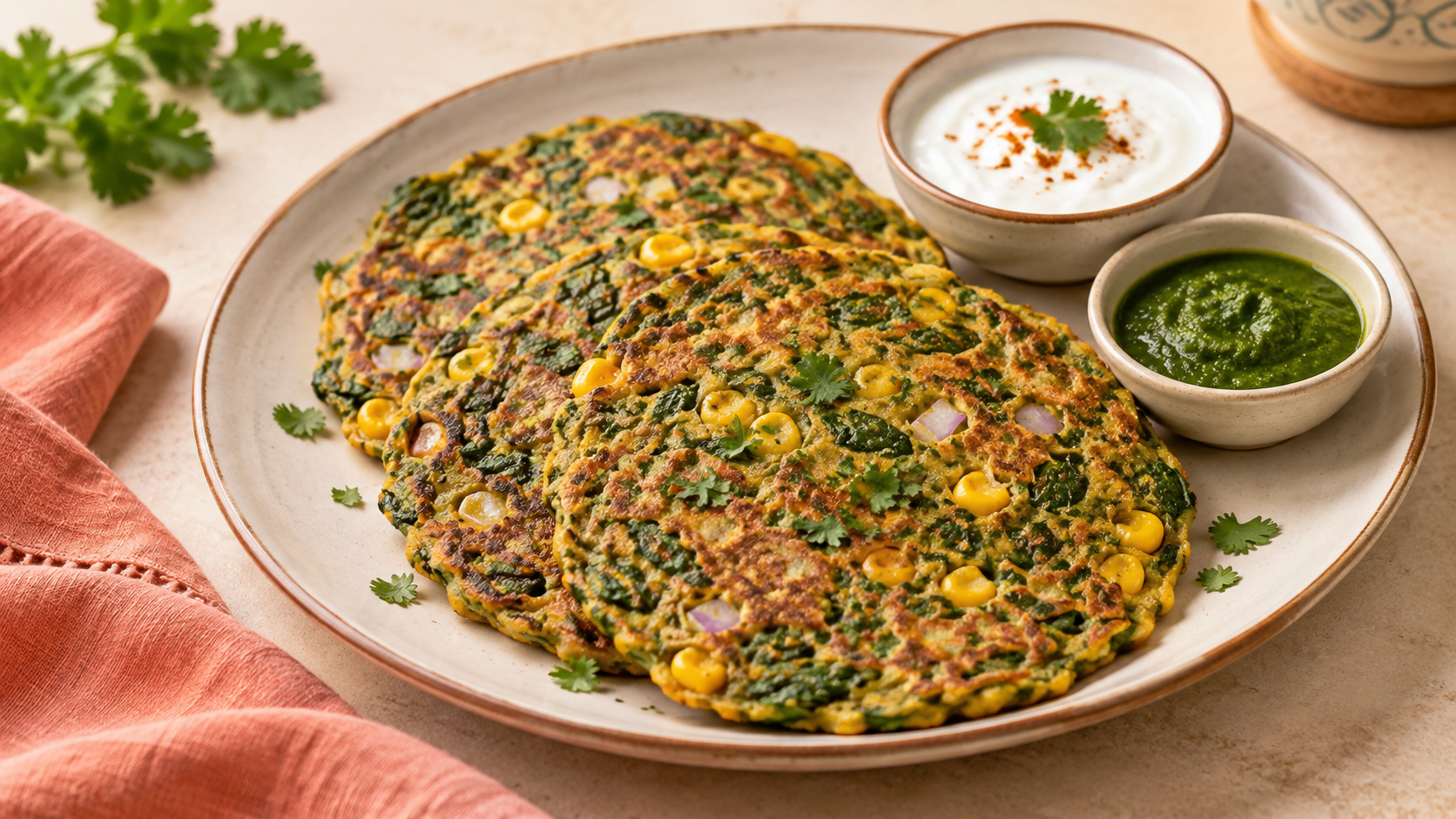
Palak Corn and Besan Cheela
Ingredients
1 cup besan
½ cup finely chopped spinach
¼ cup boiled sweet corn
1 small onion, finely chopped
1 green chilli, finely chopped
½ tsp cumin seeds
¼ tsp turmeric
½ tsp ajwain
Salt to taste
Water, as needed
1 tsp oil for cooking
Lemon juice, to serve
Method
In a bowl, mix besan, spinach, corn, onion, green chilli, cumin, turmeric, ajwain, and salt.
Add water gradually to make a smooth, pourable batter. Rest for 5-10 minutes.
Heat a non-stick pan and lightly grease it with oil.
Pour a ladleful of batter and spread it gently into a thin cheela.
Cook on medium heat until the edges turn crisp, then flip and cook the other side.
Serve warm with curd or mint chutney and a squeeze of lemon.
Why this is good for you
Besan provides plant protein and fibre, while spinach adds folate and other nutrients. Corn adds natural sweetness and texture. Pairing it with curd makes the meal more filling, and lemon adds freshness and vitamin C.